

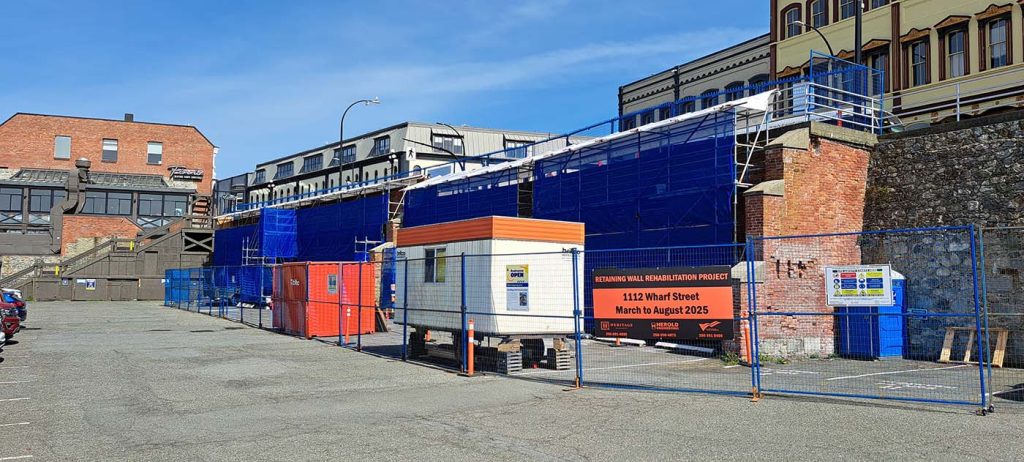
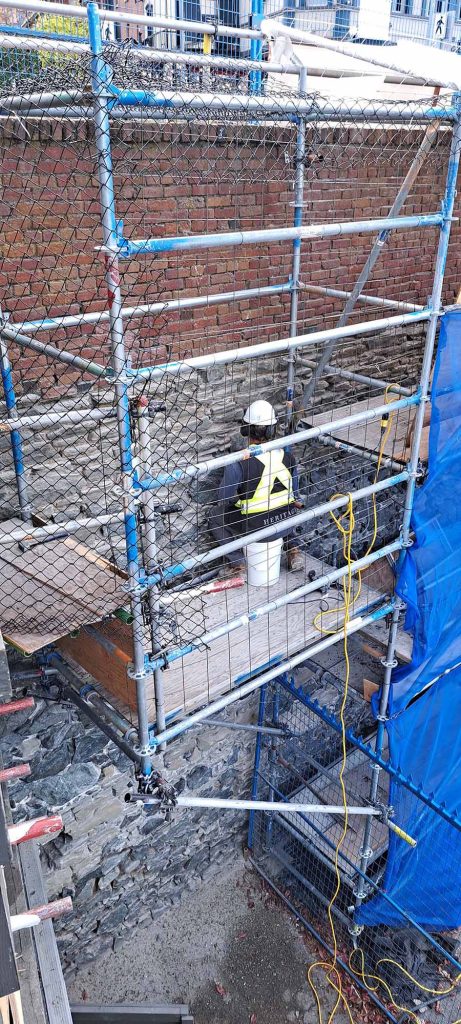
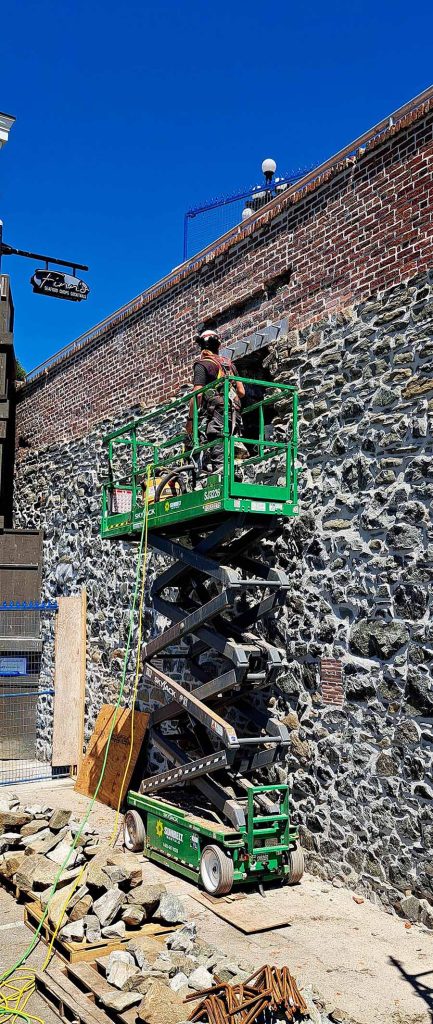
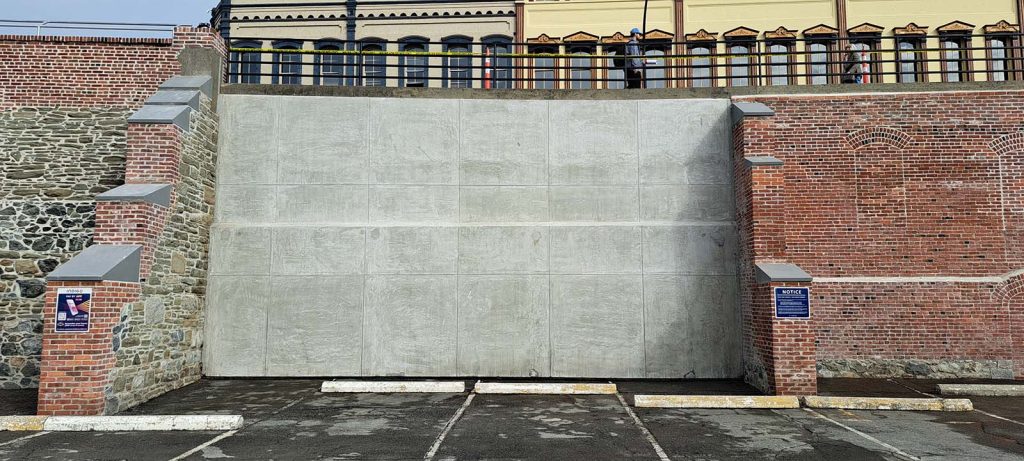
Located along Victoria’s Inner Harbour, the Wharf Street Retaining Wall is the remaining portion of the historic Hudson’s Bay warehouse. This conservation project, delivered for the City of Victoria, focused on stabilizing deteriorated stone and failing mortar through careful removal and replacement—matching original composition and prioritizing minimal intervention while restoring long-term structural integrity.

Timeline
Mar - Oct 2025

Location
Victoria, BC

Client
City of Victoria
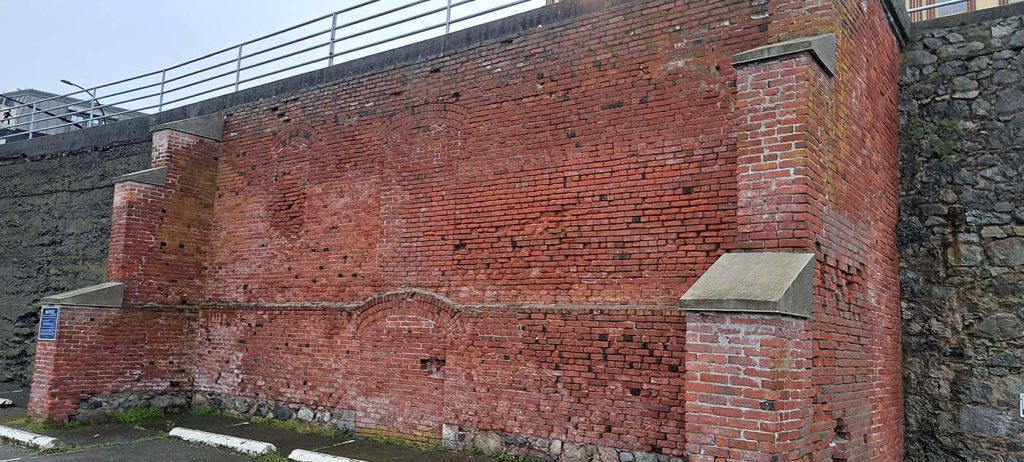
This retaining wall is one of the most significant remaining examples of Victoria’s founding industrial heritage and forms part of Victoria’s layered waterfront history. By the time work began, the wall was well past needing repair. Stone deterioration and mortar failure had progressed to the point where structural conservation was required to protect the wall and preserve its historic character.
Goals
- Complete an intensive conservation effort by removing and replacing deteriorated material while matching the original composition
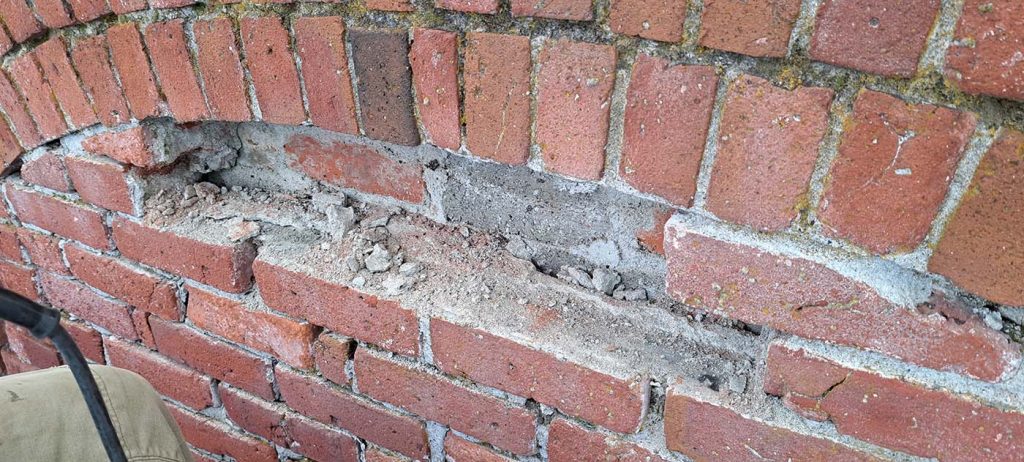
- Repair the face of the wall and fill voids to address failing mortar and deteriorating stone
- Restore structural integrity while using historically accurate methods and materials
Unique Challenges
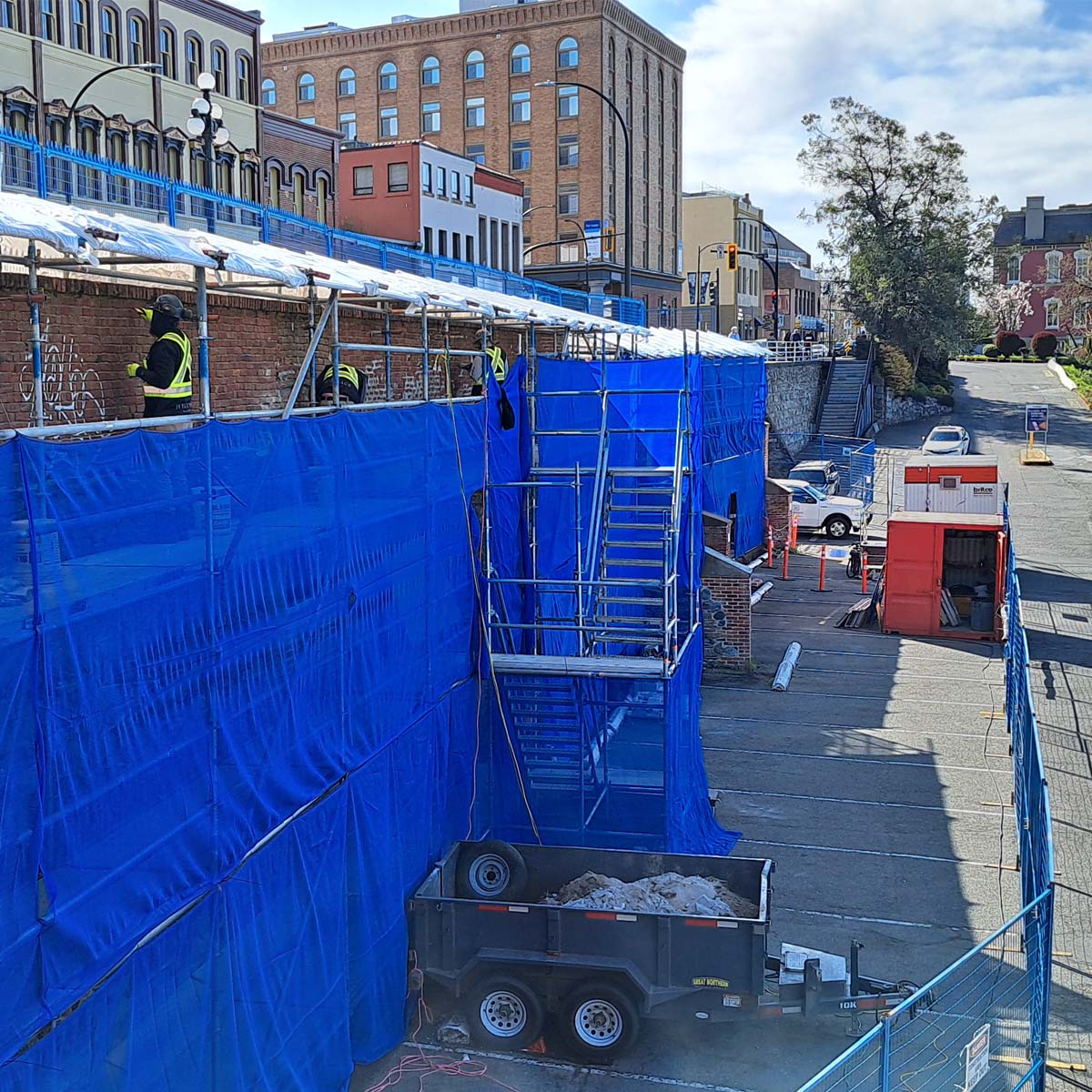
High-Impact Downtown Site
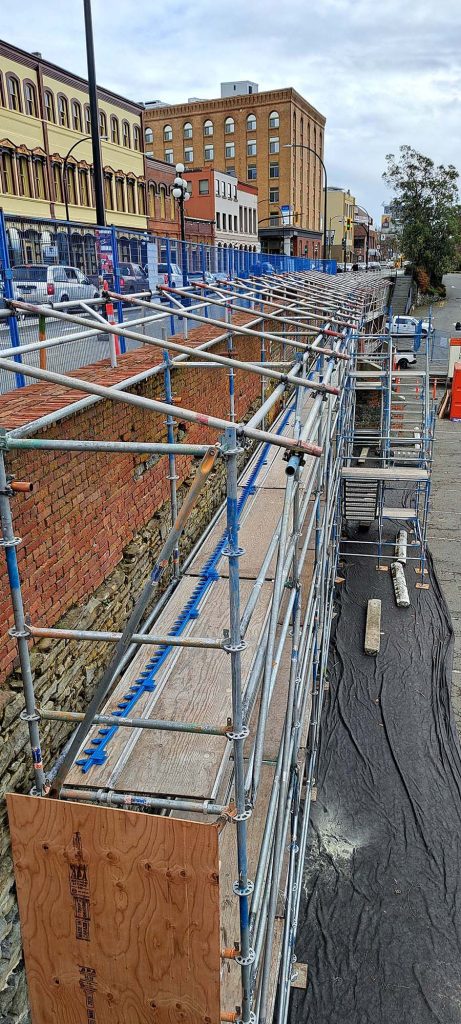
Work took place in downtown Victoria during tourist season, requiring tight coordination, careful staging, and a disciplined approach to maintaining site safety and continuity in a busy public environment.
Heritage Preservation Constraints
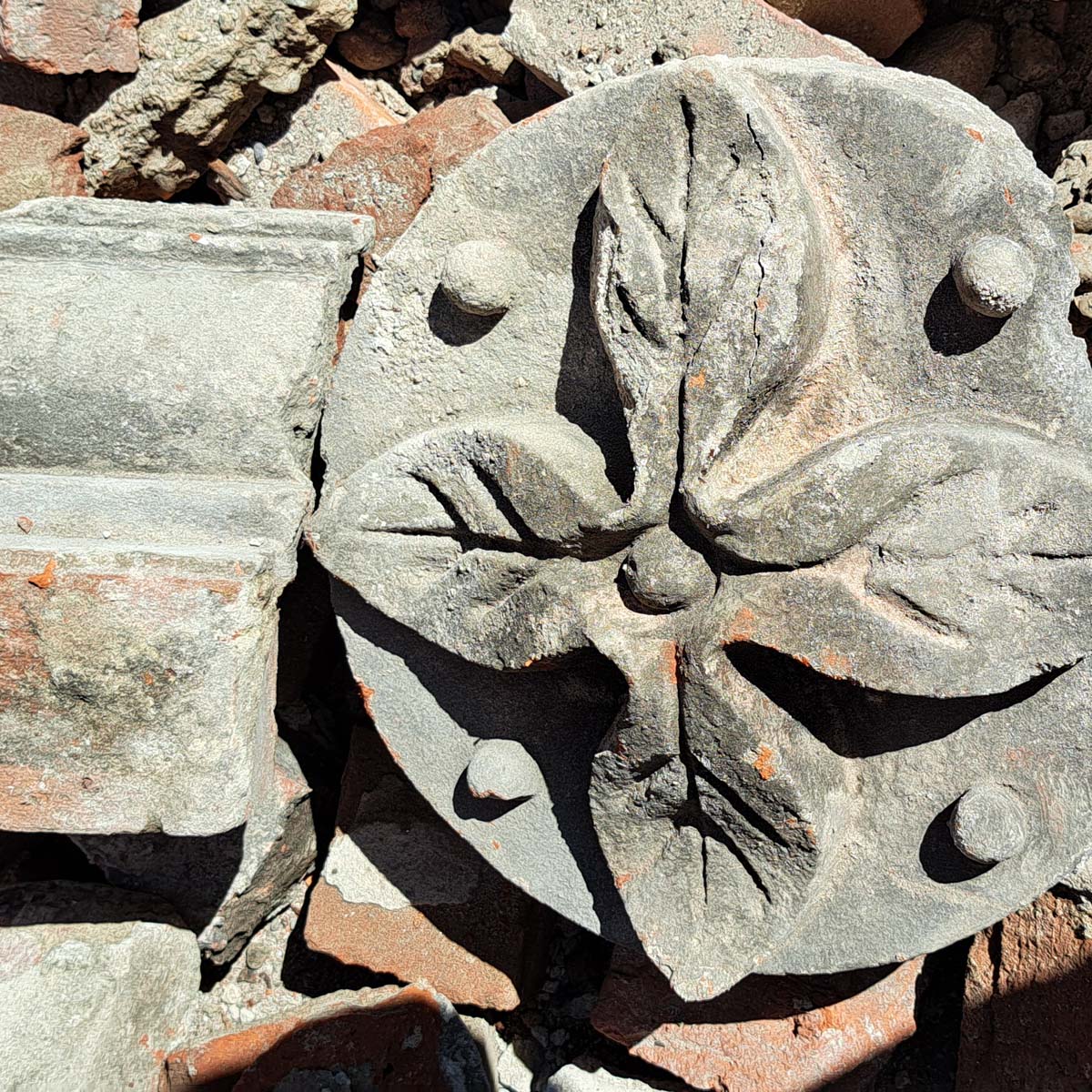
The work demanded historically accurate materials and restraint in intervention. Wherever possible, material was saved and retained, with the approach guided by doing as little intervention as possible while ensuring the wall was properly conserved and structurally sound.
Technical Approach
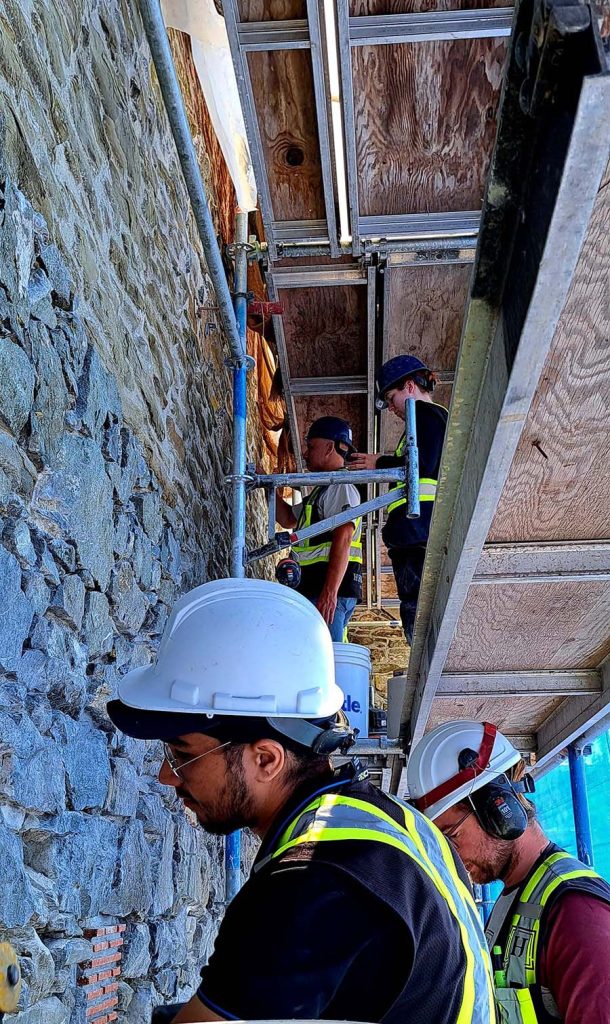
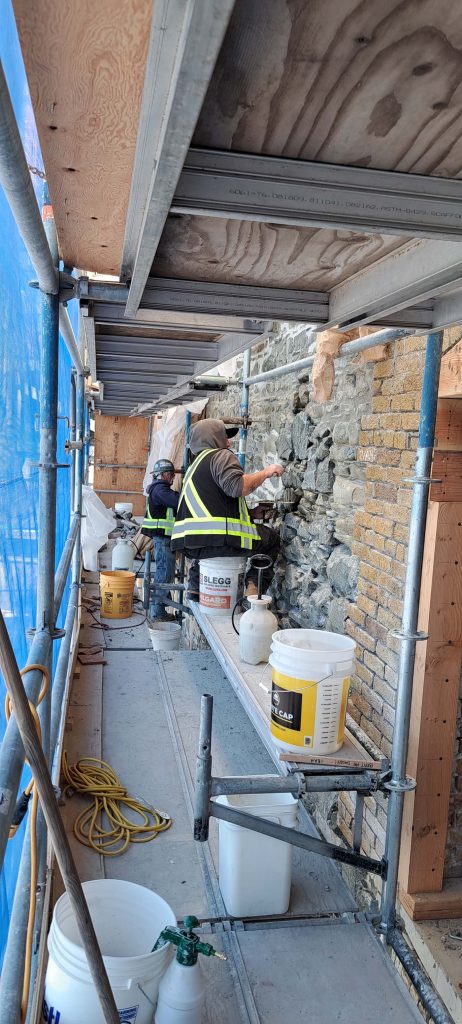
The project required careful conservation masonry techniques, including the removal of failed material and rebuilding in a way that respected the wall’s original composition and appearance.
Key work completed included:
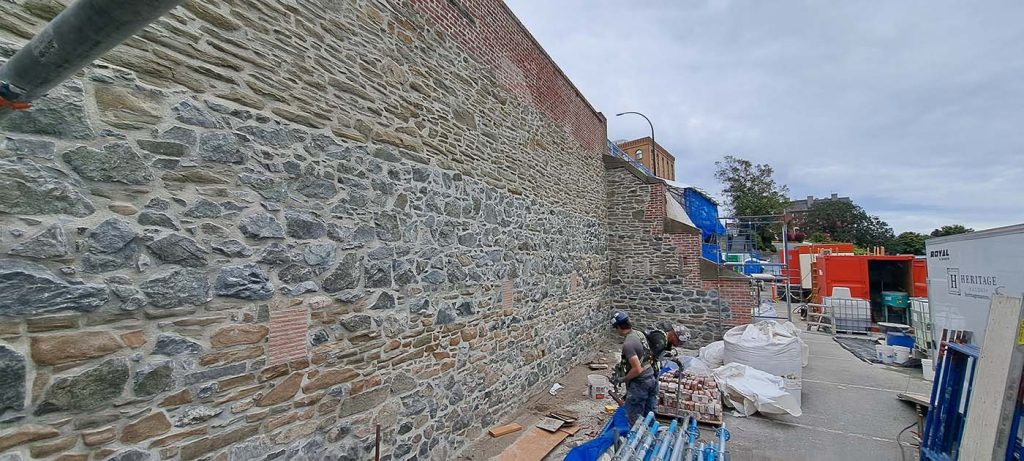
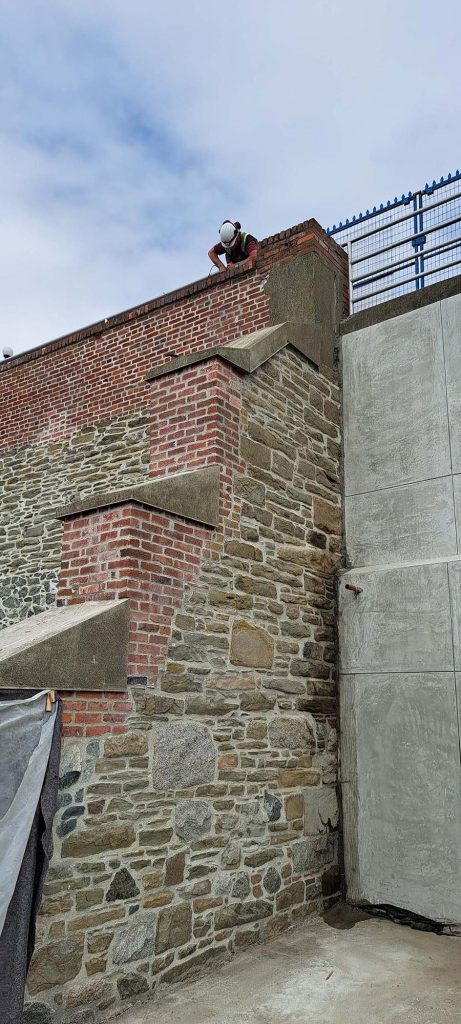
- Removal of failed material and replacement with historically aligned repairs
- Structural conservation of deteriorated stone and failing mortar
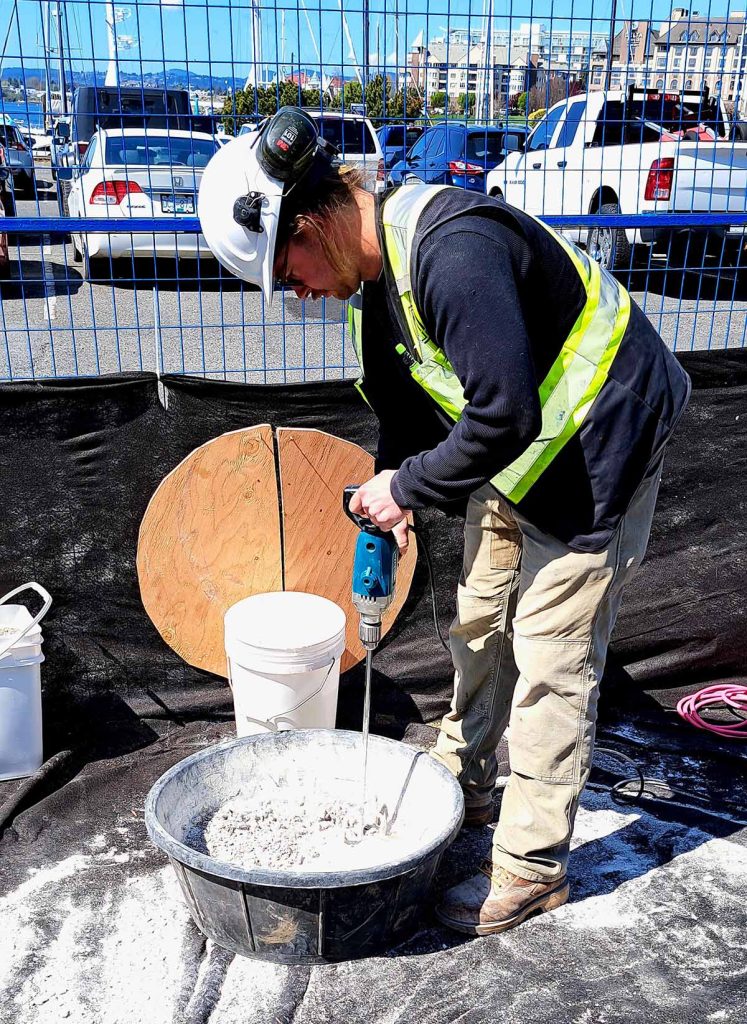
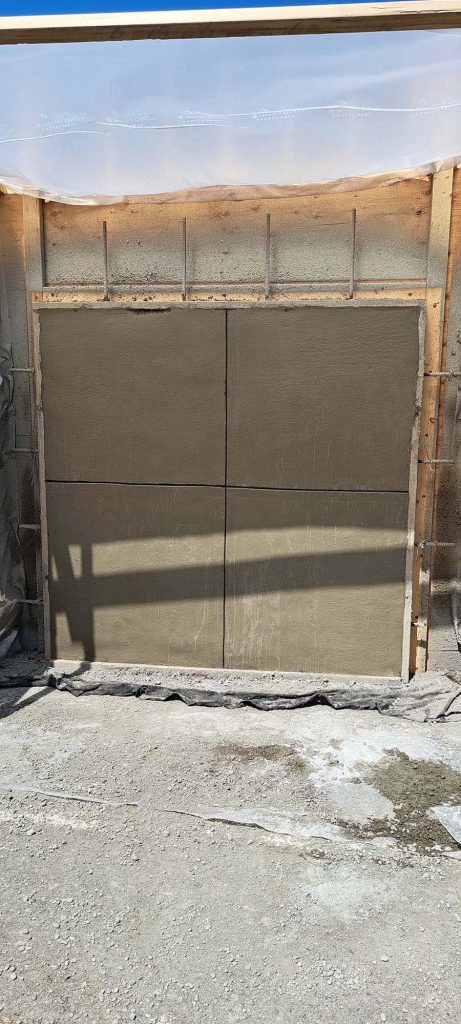
- Hot lime mortar mixing (custom mix) to match historic composition and performance. This was established through lab testing of the original material we carried out.
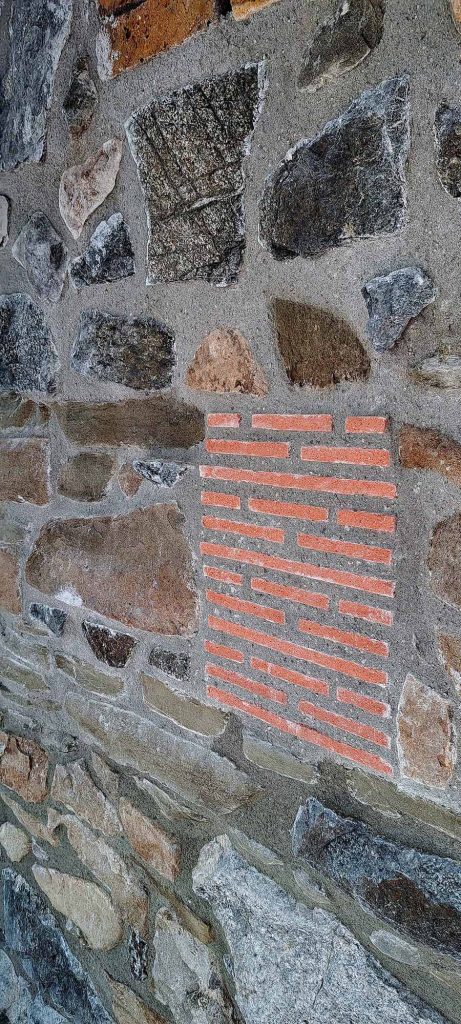
- Repair of the wall face and filling of voids to restore stability and continuity
Collaboration & Coordination
This conservation project was delivered in coordination with the City of Victoria and supported by engineering expertise to ensure appropriate structural outcomes.
Key coordination included:
- City of Victoria (project collaboration)(owner)
- Herold Engineering (engineering coordination)(contract administrator)
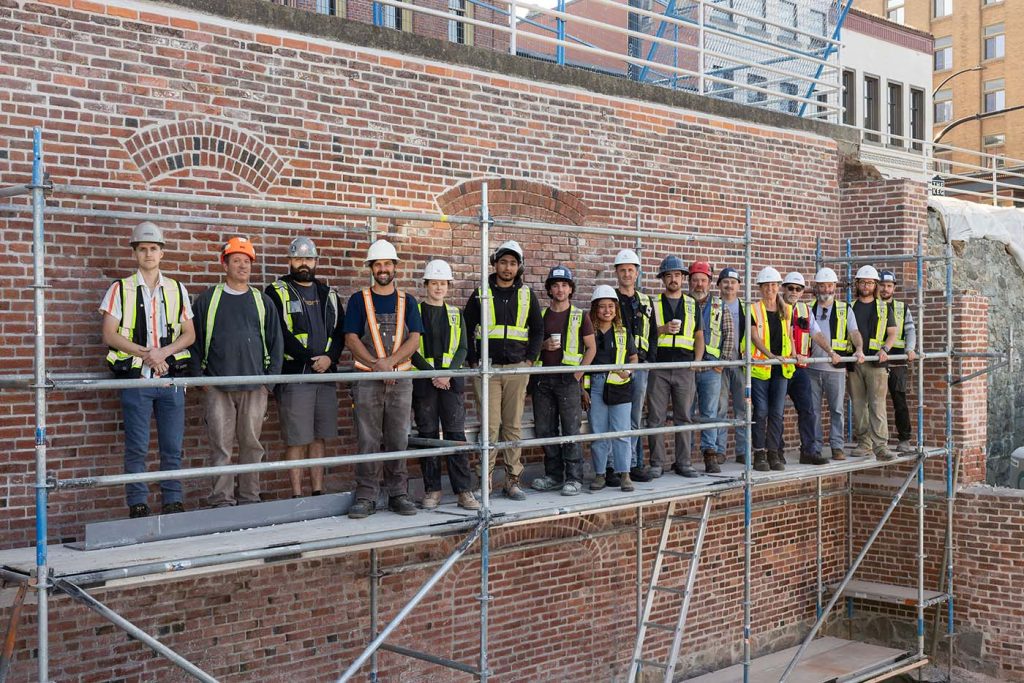
- Organized site tours for local heritage groups as part of stakeholder engagement
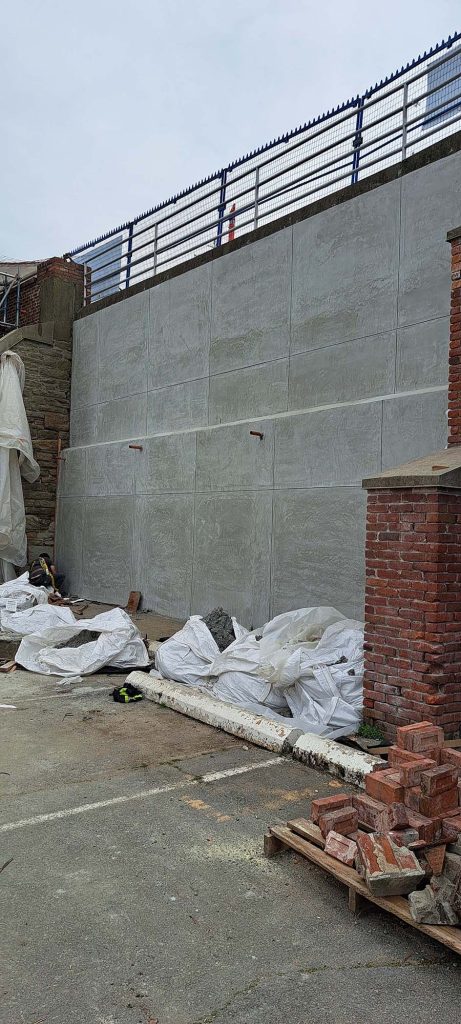
Before & After
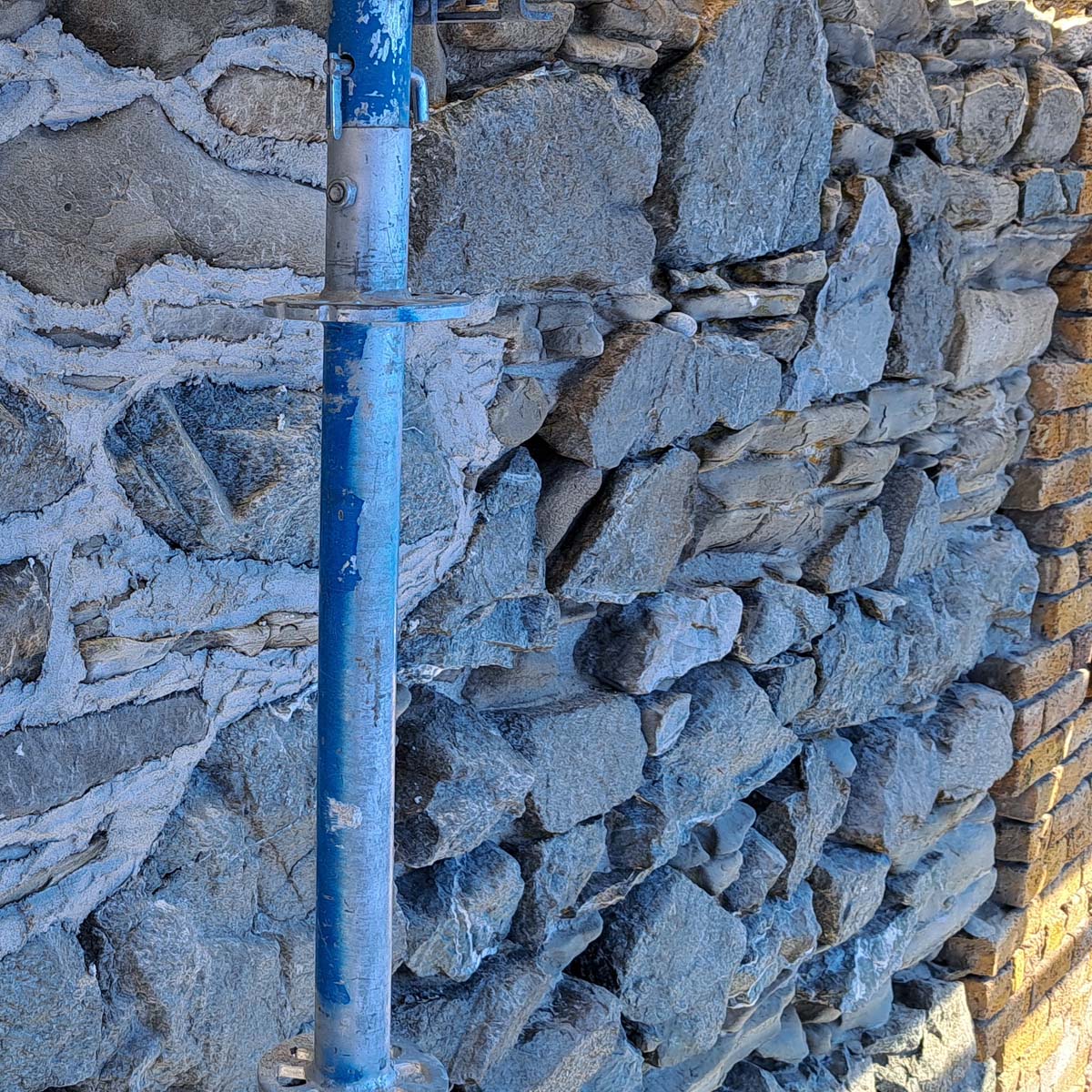
Before
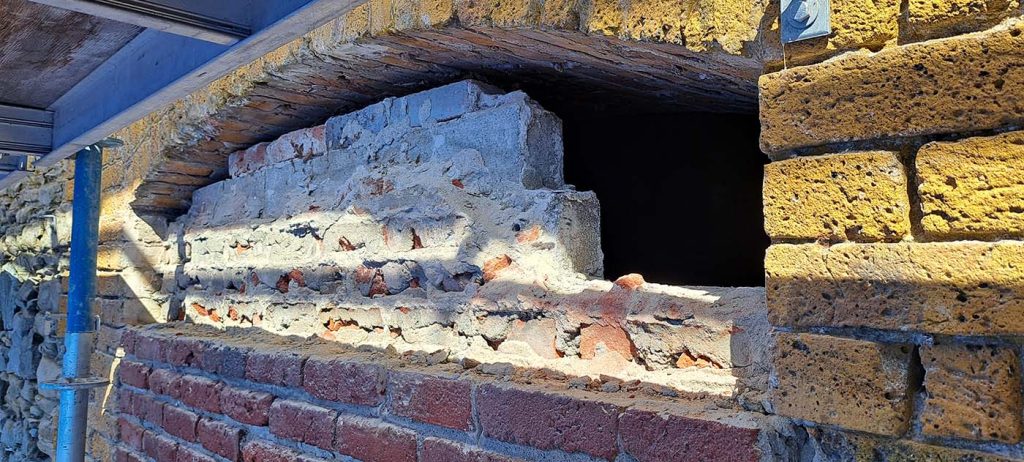
- Stone was deteriorating and mortar was failing
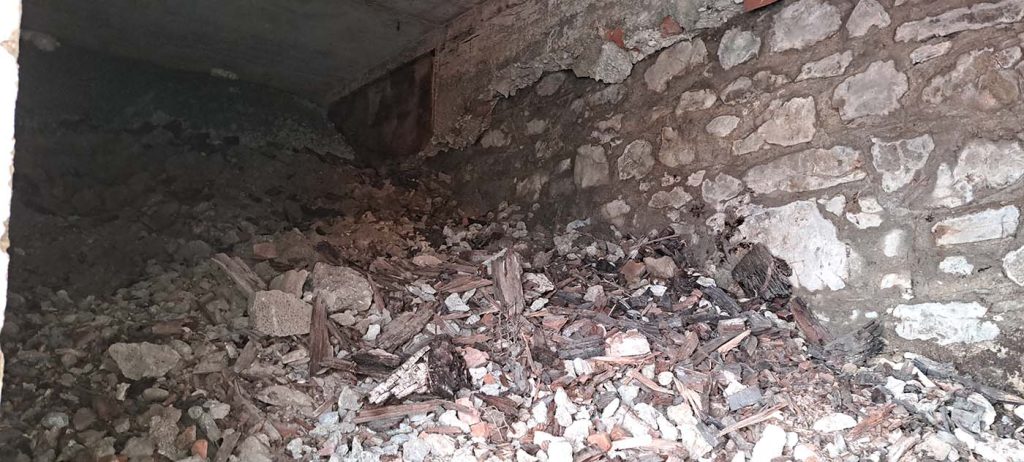
- The wall was well past needing repairs, with voids and material loss requiring structural conservation
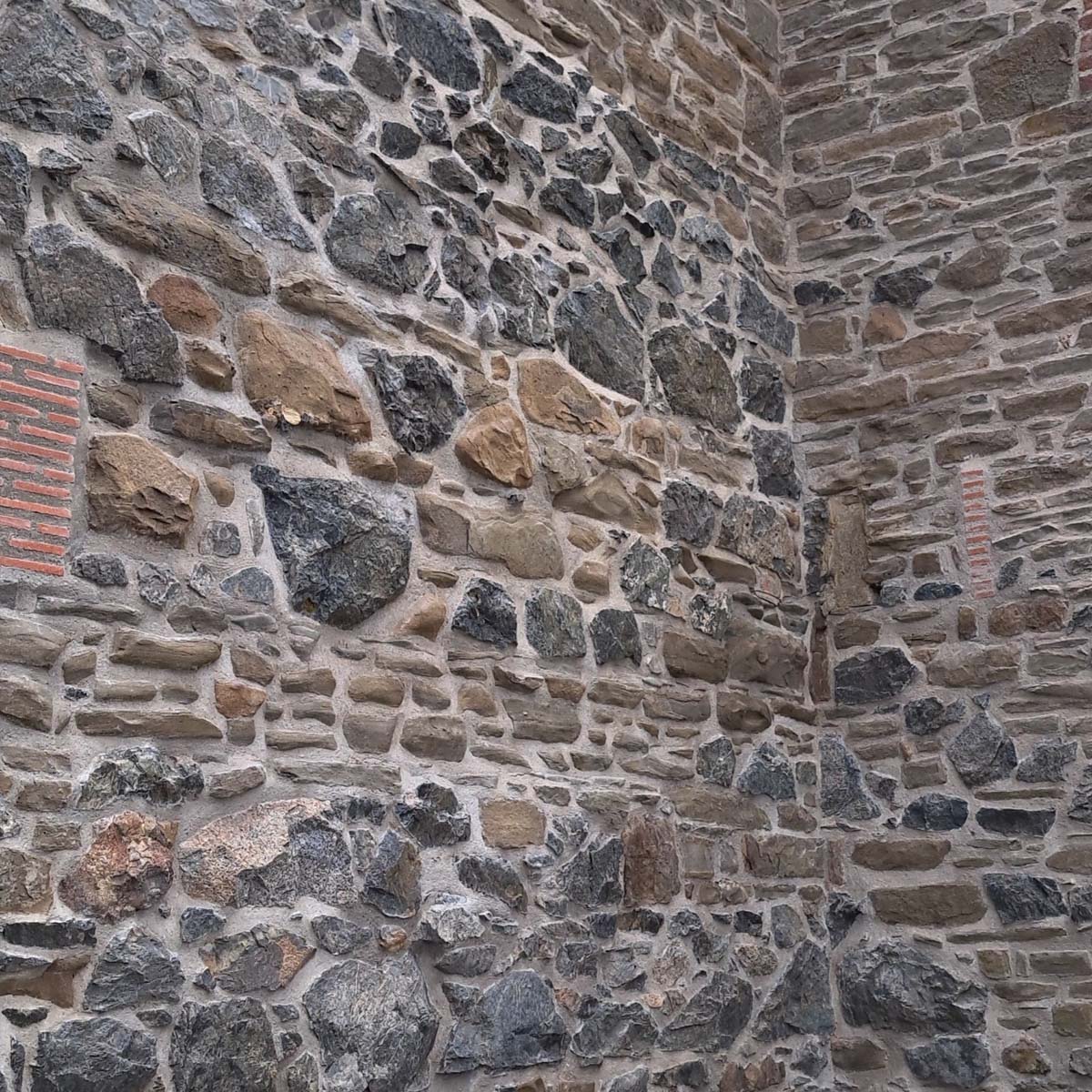
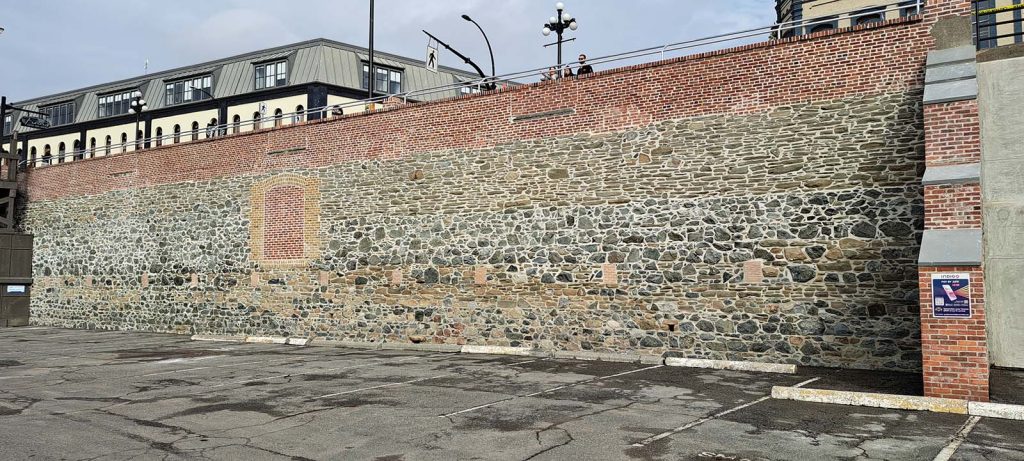
After
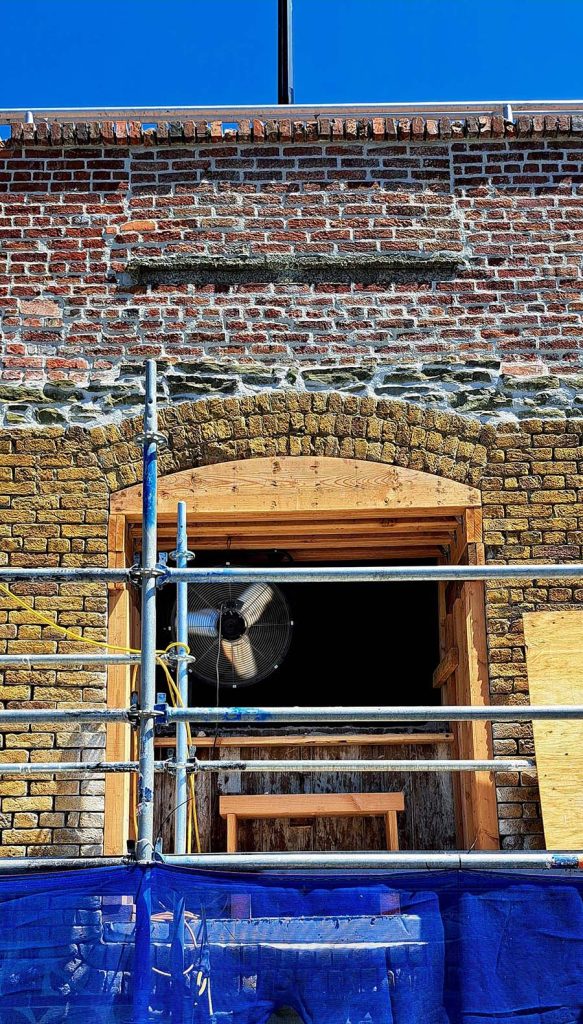
- Failed material removed and replaced with historically aligned repairs
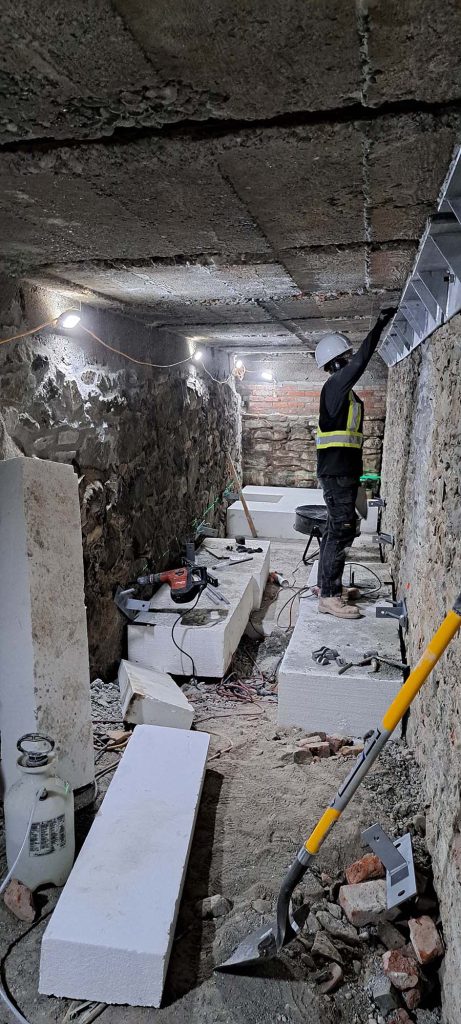
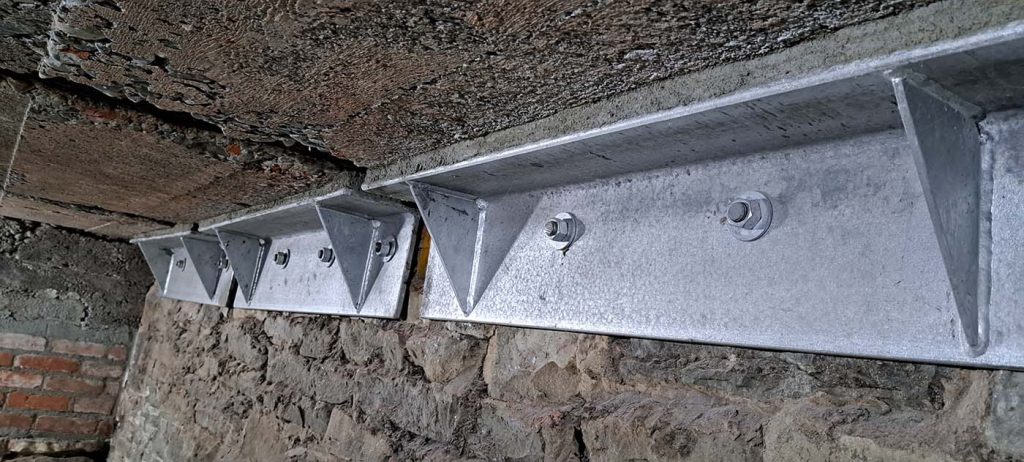
- Wall stabilized through structural fixes, including void filling and face repairs
- Hot lime mortar used to support durability and heritage accuracy
Results
Through careful material selection, historically accurate mortar work, and disciplined conservation techniques, the Wharf Street Retaining Wall was structurally stabilized while preserving the historic character of a landmark waterfront remnant. Completed in a high-visibility downtown setting, the work protected the wall for continued long-term performance in Victoria’s Inner Harbour environment.
Services Used
- Heritage masonry conservation and restoration
- Hot lime mortar mixing and historically accurate repointing/rebuild techniques
- Structural stabilization through removal and replacement of failed material
- Stakeholder coordination and heritage community engagement
Preserving historic places requires precision, planning, and respect for materials. If you’re planning a conservation project in an active public setting—where heritage accuracy and structural performance must align—connect with Heritage Masonry to discuss scope and approach.